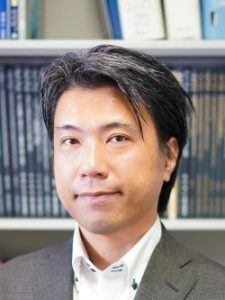
Prof. Kenichi Okada
Institute of Science Tokyo, Tokyo, Japan (formerly Tokyo Institute of Technology)
Abstract
Toward AI-Driven Scalable Wireless IC Design for Millimeter-Wave and THz Communications
Future wireless communication systems, including beyond 5G and 6G, require not only higher carrier frequencies and larger antenna arrays, but also scalable design methodologies for increasingly complex RF, millimeter-wave, and mixed-signal integrated circuits. This talk presents recent advances in millimeter-wave and THz circuit design toward future high-speed and high-capacity wireless systems.
The talk will first introduce a theoretical outlook on future trends in millimeter-wave wireless communication. It will then highlight recent developments in ultra-fast Sub-THz radios for high-data-rate and long-distance wireless links. Next, mmWave massive MIMO technologies will be discussed, with a particular focus on discrete-time operation in mmWave circuit design. This approach enables scalable phased-array architectures realizing TD-MIMO, supporting energy-efficient and flexible high-capacity wireless systems. Finally, the talk will introduce AI-driven circuit design automation as a key methodology for scaling future wireless IC development. By combining advanced high-frequency circuit techniques with AI-assisted design exploration, optimization, and evaluation, future mmWave and THz wireless ICs can be developed more efficiently while addressing increasing system complexity.
Biography
Kenichi Okada received the B.E., M.E., and Ph.D. degrees in Communications and Computer Engineering from Kyoto University, Kyoto, Japan, in 1998, 2000, and 2003, respectively. From 2000 to 2003, he was a Research Fellow of the Japan Society for the Promotion of Science in Kyoto University. In 2003, he joined Tokyo Institute of Technology as an Assistant Professor, where he is currently a Professor of Electrical and Electronic Engineering in Institute of Science Tokyo. He has authored or co-authored more than 500 journal and conference papers. His current research interests include millimeter-wave and terahertz CMOS wireless transceivers for 20/28/39/60/77/79/100/300GHz for 5G, WiGig, satellite and future wireless systems, digital PLL, synthesizable PLL, atomic clock, and ultra-low-power wireless transceivers for Bluetooth Low-Energy, and sub-GHz applications.
Prof. Okada is a member of the Institute of Electrical and Electronics Engineers (IEEE), the Institute of Electronics, Information and Communication Engineers (IEICE), the Information Processing Society of Japan (IPSJ), and the Japan Society of Applied Physics (JSAP). He was a recipient or co-recipient of the Ericsson Young Scientist Award in 2004, the A-SSCC Outstanding Design Award in 2006 and 2011, the ASP-DAC Special Feature Award in 2011 and Best Design Award in 2014 and 2015, the MEXT Young Scientists’ Prize in 2011, the JSPS Prize in 2014, the Suematsu Yasuharu Award in 2015, the MEXT Prizes for Science and Technology in 2017, the RFIT Best Paper Award in 2017, the IEICE Best Paper Award in 2018, the RFIC Symposium Best Student Paper Award in 2019, the IEICE Achievement Award in 2019, the DOCOMO Mobile Science Award in 2019, the IEEE/ACM ASP-DAC Prolific Author Award in 2020, the Kenjiro Takayanagi Achievement Award in 2020, the KDDI Foundation Award in 2020, the IEEE CICC, Best Paper Award in 2020, the IEEE ISSCC Author-Recognition Award in 2023, the IEEE A-SSCC Top-11 Contributor Award, IEEE MWCL Tatsuo Itoh Best Paper Award, and more than 50 other international and domestic awards. He is a Fellow of IEEE. He is/was a member of the technical program committees of IEEE International Solid-State Circuits Conference (ISSCC), VLSI Circuits Symposium, European Solid-State Circuits Conference (ESSCIRC), Radio Frequency Integrated Circuits Symposium (RFIC), Asian Solid-State Circuits Conference (A-SSCC), and he is/was also Guest Editors and an Associate Editor of IEEE Journal of Solid-State Circuits (JSSC), an Associate Editor of IEEE Transactions on Microwave Theory and Techniques (T-MTT), a Distinguished Lecturer and AdCom member of the IEEE Solid-State Circuits Society (SSCS).